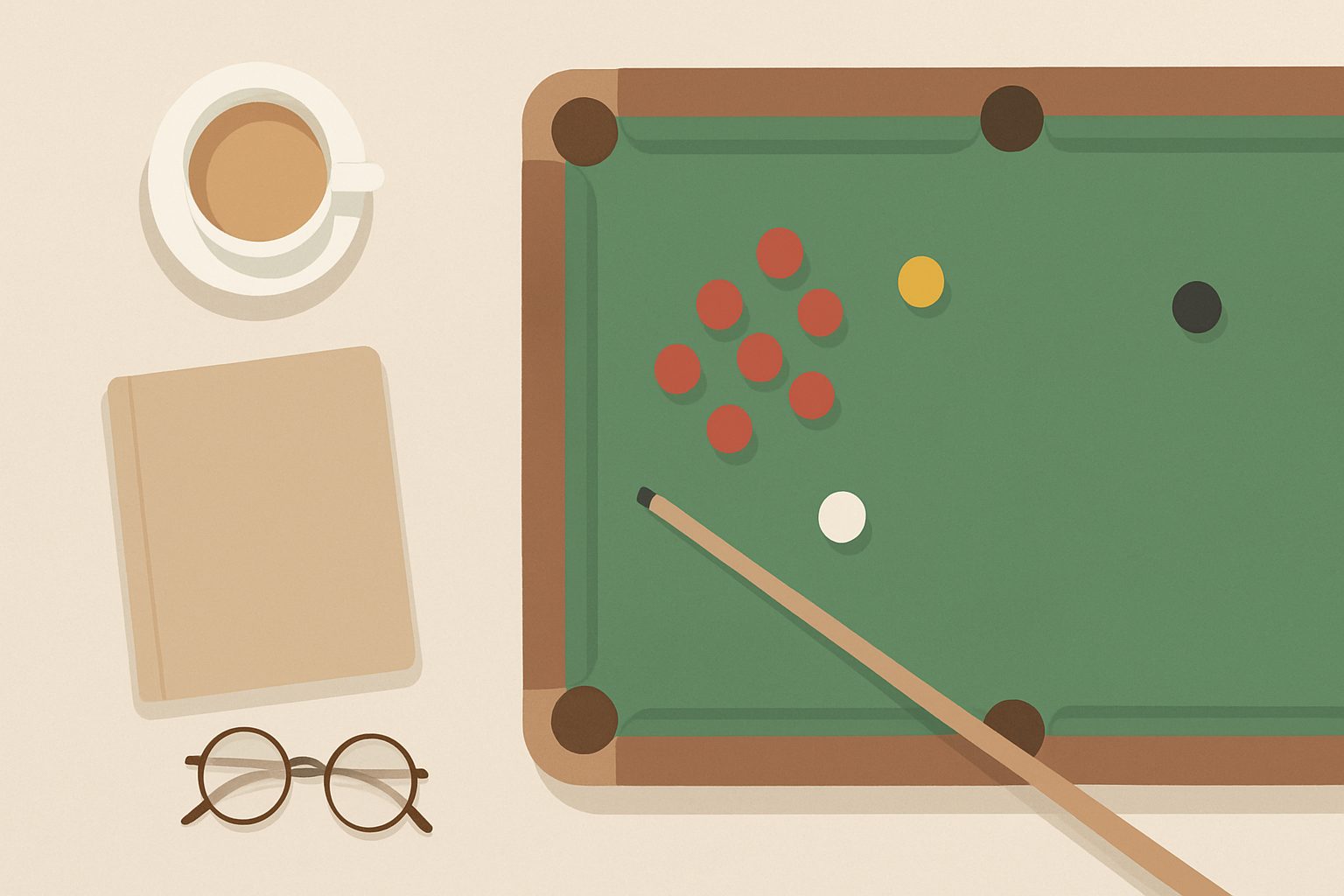
Snooker Table Maintenance & Care Tips: Keep Your Table Playing Like New
A well-maintained snooker table is a joy to play on. Poor maintenance, however, can degrade playing quality faster than you'd think—and once the cloth wears unevenly or cushions lose their responsiveness, repairs get expensive quickly. If you've invested in a home snooker table, a bit of regular care keeps it playing true and protects your investment.
Daily and Weekly Cloth Care
The playing surface is the first thing to protect. After each session, brush the cloth gently in the direction of the nap—that's the short fibres that give the cloth its smooth, directional surface. Use a proper snooker table brush, not a clothes brush or broom. A soft-bristled brush removes dust, chalk, and loose fibres without snagging the cloth.
Brush in straight lines across the table, following the nap direction. The nap typically runs from the top cushion to the bottom on a standard table, though it's worth checking your table's documentation. Brushing against the nap can fluff the fibres and create a rough surface that affects ball roll and cue action.
Once a week, do a slightly more thorough clean with a damp cloth or specialist table cleaning cloth to remove chalk dust that dry brushing misses. Don't oversaturate—you're not trying to wash the table. A cloth dampened with distilled water works fine. Avoid bleach, harsh chemicals, or alcohol-based cleaners, which can discolour or damage the cloth.
Protecting and Replacing the Cloth
Even with good care, snooker cloth eventually wears. Most domestic cloths last five to ten years depending on usage frequency. You'll notice uneven wear around the pocket area or along common shot lines where the nap becomes matted or frayed.
Minor restoration is possible: specialist services can iron or steam the cloth to restore some nap, which buys time. Once wear becomes visible and affects play, re-clothing becomes necessary. This isn't a quick fix—it's a proper job involving cloth removal, slate inspection, and professional fitting. Many UK snooker retailers offer re-clothing services ranging from £400 to £800 depending on table size.
Cushion and Rail Maintenance
Cushions are the second-most-important surface. They take a beating from thousands of collisions, and wear or damage directly affects play. Check cushions regularly for signs of wear: flattening, hardening, or visible cracks. A cushion past its best will feel sluggish and lose responsiveness, making shots unpredictable.
Keep cushions clean by wiping them with a dry cloth to remove chalk and dust. If they're visibly grimy, a slightly damp cloth works, but avoid soaking the rubber. Moisture can degrade the rubber compound and seeping into the frame can cause wood rot.
Replace cushions if they're no longer providing consistent rebound or if the felt facing is torn. Cushion replacement typically costs £150–£400 per set of six, depending on quality. Cheap replacement cushions are a false economy—they'll feel noticeably different and won't last as long.
Slate Inspection and Maintenance
The slate bed underneath the cloth is the true playing surface and should remain perfectly level. It's unlikely to need major intervention if the table's been looked after, but it's worth checking occasionally. Place a straight edge across the slate in several directions—if you spot rocking or significant gaps, the table may have settled unevenly or the frame may be warped.
Minor slate damage—small cracks or chips—can affect play. Major damage requires professional resurfacing or slate replacement, which is expensive. Keep the slate dry and avoid placing water glasses or damp objects on the table. Moisture ingress can cause the slate to expand slightly and throw levelness out.
Ball Care
Snooker balls take wear alongside everything else. Clean them monthly with a soft cloth and mild soapy water, drying thoroughly immediately. Avoid dropping them or storing them in damp conditions—the resin can become sticky or the surface can crack.
Replace balls if they're chipped, cracked, or no longer roll true. A misshapen or damaged ball throws off every shot and is unfair to play with. A full set of professional-grade balls costs £50–£150 depending on quality.
Environment and Storage
Where you keep your table matters as much as what you do to it. Snooker cloth is sensitive to humidity and temperature swings. Ideally, keep your table room at 16–20°C with relative humidity between 40–60%. Swings in humidity can cause the slate to expand and contract, throwing levelness out. In damp UK homes, a dehumidifier in the room helps.
Cover the table when not in use, but use a fitted snooker cover—not a plastic sheet that traps moisture. A breathable cover keeps dust off whilst allowing air circulation.
Tools You'll Actually Need
Start with the essentials: a proper snooker brush, damp cloth, and dry cloth. Beyond that, a specialist table cleaning cloth designed for snooker tables, a feather duster for fine dust, and a level (to spot settling) are worthwhile investments. Cleaning kits specific to snooker are available from specialist retailers.
Honest Perspective
Good maintenance doesn't cost much—mainly time and the occasional brush replacement. Where it saves real money is by making professional repairs unnecessary. A table left to gather dust and neglected for months will deteriorate noticeably; one brushed weekly and given basic care stays playable for years. It's a straightforward trade-off: twenty minutes a week now, or £500+ in repairs later.
More options
- Home Snooker Tables (All Sizes) (Amazon UK)
- Slate Bed Snooker Tables (Amazon UK)
- Snooker Table Accessories & Bundle Sets (Amazon UK)
- Snooker Cue Sets (Amazon UK)
- Snooker Table Cloth & Re-Clothing Kits (Amazon UK)